Walk into any rice shop and ask for raw rice or steam rice, and you will notice they don’t look or cook the same way, even if the shopkeeper hands you the same variety. The real difference between steam rice and raw rice starts much earlier, at the rice mill itself. Both come from the same paddy, but the way they are processed before reaching your kitchen changes their color, texture, and cooking time. Understanding this difference makes it easier to pick the right rice for your needs.
What Is Raw Rice
Raw rice is rice that goes straight from the paddy to the mill, without any soaking or steaming in between. Once harvested, the paddy is dried and milled directly, so the grain keeps its natural form. This gives raw rice its bright white color and a fuller, more natural aroma. When cooked, the grains turn out soft and slightly sticky. It is the type of rice most commonly used in everyday home cooking across many parts of India.
What Is Steam Rice
Steam rice goes through an extra step before milling. The paddy is soaked in water, then steamed, and finally dried before it reaches the mill. This process changes the grain from the inside out. Once milled, steam rice has a light golden color instead of pure white, and it holds its shape better after cooking. The grains come out firm and separate rather than sticky, which is why steam rice is often preferred for dishes where each grain needs to stay distinct.
Raw Rice and Steam Rice: Key Differences
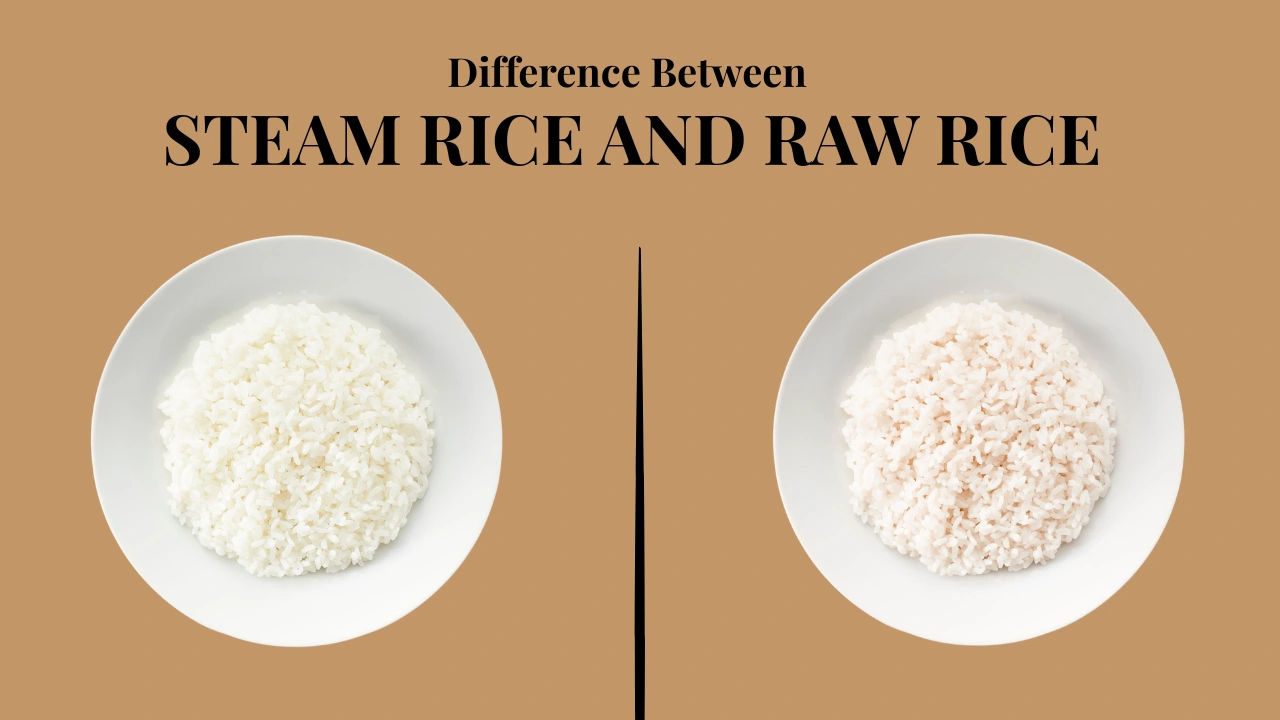
The easiest way to tell steam rice and raw rice apart is by looking closely at the grain and noticing how it behaves after cooking.
| Feature | Raw Rice | Steam Rice |
|---|---|---|
| Color | Bright white | Light golden or slightly yellow |
| Texture after cooking | Soft, slightly sticky | Firm, with grains staying separate |
| Cooking time | Cooks faster | Takes a little longer |
| Shelf life | Shorter | Longer |
| Aroma | Stronger, natural smell | Milder smell |
If you pick up a handful of dry, uncooked grains, raw rice will look pure white, while steam rice will have a faint golden tint even before cooking. Once cooked, the real difference shows up on the plate. Raw rice grains tend to hold together a little, while steam rice grains stay loose and separate, even after the rice cools down.
Why the Same Rice Comes in Two Types
You may have noticed that the same rice variety, like Basmati or Sona Masoori, is often sold as both raw and steam rice. This is not a mistake or a duplication. Mills process the same harvest in two different ways to suit different cooking styles and preferences. Some households prefer the soft texture and natural aroma of raw rice for everyday meals, while others prefer the firmer grains of steam rice for dishes that need each grain to stay separate. This is why you will find both versions available side by side in the market.
Choosing the Right Rice for Your Dish
- For everyday meals like dal-chawal, curd rice, or khichdi, raw rice works best because of its soft, slightly sticky texture.
- For dishes like biryani, pulao, or fried rice, steam rice is the better option since the grains stay firm and separate instead of turning mushy.
- If you cook in large batches or want rice that stays fresh for longer, steam rice is more practical because of its longer shelf life.
- If a strong, natural aroma matters more to you than shelf life, raw rice remains the better pick for daily cooking.
- For fermented dishes like idli or dosa batter, raw rice is the traditional and preferred choice.
Conclusion
Raw rice and steam rice both start from the same paddy, but the processing method sets them apart in appearance, texture, moisture, and shelf life. This difference shapes how each performs in cooking and how well it holds up during storage and export. Choosing between them depends on the intended use and market.
FAQs
Q1: Can we eat steam rice daily?
Ans: Yes, steam rice can be eaten daily as part of a regular diet. It is commonly used in everyday cooking across many households and export markets.
Q2: Is Sona Masoori rice steamed or raw?
Ans: Yes, steam rice can be eaten daily as part of a regular diet. It is commonly used in everyday cooking across many households and export markets.
Q3: Is steam rice good for you?
Ans: Steam rice retains more of its nutrients compared to raw rice, since the steaming process pushes some nutrients from the outer layer into the grain before milling.
Q4: Is steam rice healthier than raw rice?
Ans: Both types offer nutritional value, but steam rice generally retains more nutrients due to its processing, while raw rice keeps more of its natural aroma and taste.
Q5: What kind of rice is best for a diabetic to eat?
Ans: People managing diabetes are often advised to choose rice with a lower glycemic index, and steam rice is commonly considered a suitable option. It is best to consult a doctor or nutritionist for personal dietary advice.
Q6: Which is better, steamed rice or boiled rice?
Ans: Steamed rice is processed using pressure steam before milling, while boiled rice is cooked by submerging it in water. The two differ in processing stage and method, not in one being inherently better than the other.