Rice weevil is one of the most damaging stored grain pests found in rice storage facilities, warehouses, and home pantries across the world. Scientifically known as Sitophilus oryzae, this small beetle causes significant post-harvest losses by feeding inside individual grain kernels. This article covers everything you need to know about rice weevils, including how to identify them, where they come from, what damage they cause, and how to get rid of them effectively.
What is a Rice Weevil?
A rice weevil is a small, destructive insect that primarily attacks stored grains, especially rice. Its scientific name is Sitophilus oryzae, and it belongs to the family Curculionidae. In India, it is commonly known as sursuri, a name widely used in households and farming communities to describe this pest. The rice weevil is not just limited to rice.
It also infests wheat, maize, barley, oats, sorghum, and other stored cereal grains. This makes it a serious threat to grain storage at both household and commercial levels. Rice weevils are found worldwide, with a particularly high presence in tropical and subtropical regions where warm and humid conditions support their rapid breeding. They are commonly found inside grain storage bags, silos, warehouses, and kitchen pantries where grains are stored for extended periods.
Rice Weevil Scientific Name & Classification
The rice weevil scientific name is Sitophilus oryzae, derived from Greek and Latin roots. “Sitophilus” means grain-loving, and “oryzae” refers to rice, which directly reflects this insect’s preferred host. It belongs to the order Coleoptera, making it a true beetle despite being commonly called a weevil.
Understanding its classification helps in identifying the pest accurately and choosing the right control method. Sitophilus oryzae is closely related to other stored grain pests like the maize weevil (Sitophilus zeamais) and the granary weevil (Sitophilus granarius), and is often confused with them in field identification.
| Classification | Detail |
|---|---|
| Kingdom | Animalia |
| Order | Coleoptera |
| Family | Curculionidae |
| Species | Sitophilus oryzae |
How to Identify a Rice Weevil
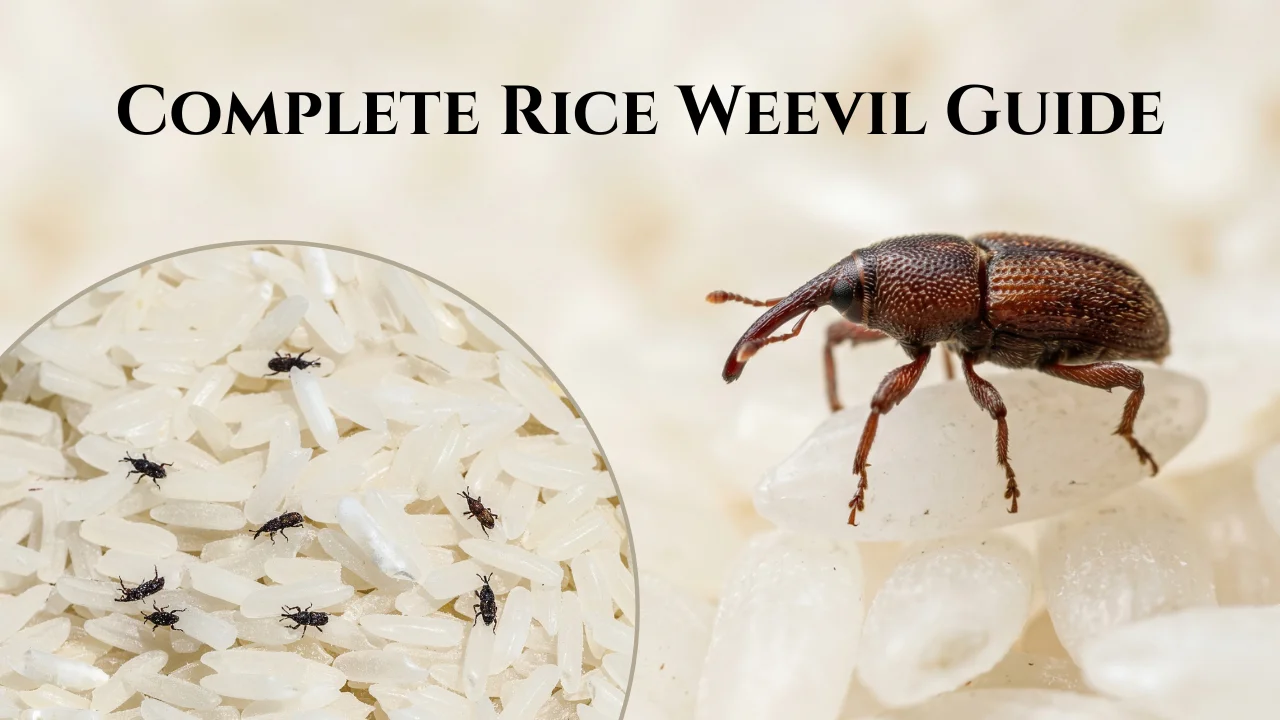
Rice weevils are small insects, measuring between 2 to 3mm in length, with a distinctive reddish-brown body marked by four light yellowish or reddish spots on the wing covers. The most recognizable feature is their elongated snout, which they use to bore into grain kernels to feed and lay eggs.
Female weevils chew a small hole into a grain, deposit a single egg inside, and seal it with a waxy secretion. The larva develops completely hidden inside the kernel, making early detection difficult. By the time damage is visible, infestation is usually already widespread. Adult weevils can fly, which allows them to spread quickly across storage areas.
| Bug Type | Color | Size | Found In |
|---|---|---|---|
| Rice Weevil | Reddish-brown | 2-3mm | Inside grain |
| Black bugs in rice | Black | 2-4mm | On surface |
| White insects in rice | White/cream | 1-2mm | Inside grain |
What Attracts Rice Weevils?
Rice weevils thrive in warm and humid environments. Temperatures between 25°C and 30°C combined with humidity levels above 60% create ideal breeding conditions for Sitophilus oryzae. These conditions are common in Indian kitchens, warehouses, and storage rooms, especially during monsoon season. Apart from rice, poorly stored grains also attract rice mites and black bugs in rice, which can appear alongside weevil infestations, making the problem worse if not addressed early.
- Open or loosely packed rice bags allow easy access for weevils.
- Improperly cleaned pantry shelves collect grain dust that attracts and shelters pests.
- Old rice sitting too long in storage becomes more vulnerable to infestation.
- High humidity above 60% accelerates weevil breeding and egg hatching.
What Smells Do Rice Weevils Hate?
- Bay leaves placed inside storage containers act as a natural repellent.
- Cloves have a strong aroma that deters weevils effectively.
- Neem leaves are widely used in Indian households to protect stored grains.
- Cumin and basil essential oils can help repel weevils when used around storage areas.
Why Do I Keep Getting Rice Weevils?
- Rice bought from the market may already be infested before reaching your home.
- High humidity levels inside your home create conditions where weevils breed continuously.
- Storing rice in open or loosely sealed bags makes reinfestation easy.
- A pantry that is not cleaned regularly retains grain residue that attracts pests repeatedly.
Are Rice Weevils Dangerous?
Rice weevils are not directly dangerous to humans. They do not bite, sting, or carry known diseases. However, heavily infested rice is not suitable for consumption as the grain quality deteriorates significantly. Many people ask whether rice weevils are harmful, and the honest answer is that they are harmful to your stored grain, not to your health in a direct sense.
If you find weevils in your rice, it is best to discard the affected batch or thoroughly clean and sun-dry the grain before deciding whether it is still usable. Consuming a few weevils accidentally is generally considered harmless.
What If I Accidentally Ate Weevils?
Accidentally eating rice weevils is unlikely to cause any serious harm. They are not toxic and do not carry disease. Some people may experience mild discomfort, but in most cases there are no noticeable effects. If you have concerns, consult a doctor.
How Long Can Weevils Live in Rice?
Adult rice weevils can live for 3 to 6 months inside stored grain under favorable conditions. In a well-stocked rice bag with adequate warmth and humidity, they can survive, feed, and continue breeding throughout their lifespan without any external food or water source.
Do All Bags of Rice Have Weevils?
Not all bags of rice have weevils, but any bag can become infested if storage conditions are poor. Rice packed in airtight, food-grade packaging under controlled conditions is less likely to carry bugs. However, rice stored in loose or thin plastic bags, especially in warm and humid environments, is at higher risk.
Sometimes bugs found in rice, including black bugs in rice, are introduced at the warehouse or retail level before the bag even reaches your home. Buying from reputable brands and checking packaging for damage before purchase can reduce the chances of bringing an already infested bag home.
How Do I Know If My Rice Has Weevils?
- Small holes bored into individual rice grains are a clear sign of weevil activity.
- Fine powder or dust settled at the bottom of the bag indicates grain damage from feeding.
- Hollow grains that crumble or break apart easily suggest larvae have fed inside them.
- Visible adult bugs moving on the surface of rice confirm an active infestation.
Should I Throw Out My Rice If It Has Bugs?
It depends on the level of infestation. If only a few bugs are visible, you can spread the rice in sunlight, clean it thoroughly, and wash it well before use. If the infestation is heavy, with a large number of bugs, hollow grains, and foul smell, discarding the batch is the safer choice.
How to Remove Insects From Rice
In Indian households, sursuri in rice is a common problem, especially during monsoon and summer months when heat and humidity peak. Removing bugs found in rice requires a combination of physical methods that are simple, chemical-free, and practical for home use. Knowing how to remove insects from rice properly can help salvage a batch before the infestation spreads further. The key is to act quickly as soon as you spot any signs of weevil activity, because delays allow the population to grow and damage more grain.
- Spread rice in direct sunlight for 3 to 4 hours. Weevils dislike heat and light and will move away from the grain naturally.
- Freeze rice for 4 to 7 days at temperatures below 0°C to kill eggs, larvae, and adults at all life stages.
- Sieve the rice using a fine mesh strainer to physically separate and remove adult weevils and debris.
- Wash rice thoroughly under running water before cooking to remove any remaining insects or dust.
Can You Wash Weevils Out of Rice?
Washing rice under running water can remove adult weevils and surface debris, but it does not eliminate eggs or larvae hidden inside the grain kernels. For better results, combine washing with sunlight drying or freezing first. Washing alone is not enough to fully clean a heavily infested batch.
How to Prevent Rice Weevils — Storage Tips
- Store rice in airtight glass or steel containers that seal completely and do not allow moisture or pests to enter.
- Keep your storage area dry and cool, ideally below 25°C, to slow down weevil breeding activity.
- Never store rice in plastic bags for the long term as weevils can chew through thin plastic material.
- Check rice packaging carefully before purchase and look for any signs of damage, holes, or existing infestation.
- Rotate your stock regularly and always use older rice first to avoid grain sitting undisturbed for too long.
Consistent rice weevil control comes down to habits more than one-time fixes. Maintaining a clean, dry, and well-organized storage space significantly reduces the risk of reinfestation. Unlike the rice root weevil, which is a field pest, stored grain weevils are entirely manageable with the right storage practices followed regularly.
Can Rice Weevils Get Into Ziploc Bags?
Yes, rice weevils can get into Ziploc bags. These bags are not fully airtight and weevils can chew through the thin plastic over time. Ziploc bags are not a reliable long-term storage solution for rice. Airtight glass or steel containers are a much better option for keeping weevils out.
Will Grain Weevils Infest My Entire House?
Grain weevils typically stay close to their food source and do not spread through the entire house the way cockroaches or ants do. However, if infested grain is stored in multiple locations, weevils can appear in different areas. Keeping all grains in sealed containers and cleaning storage spaces regularly prevents any wider spread.
FAQs
Q1: Is it safe to eat rice with weevils?
Ans: Rice with a few weevils can be cleaned and eaten after thorough washing and drying. Heavily infested rice is best discarded.
Q2: What is the hardest bug infestation to get rid of?
Ans: Weevil infestations are difficult to eliminate because eggs and larvae hide inside grain kernels, making them invisible until adults emerge.
Q3: Can I still eat rice that has weevils?
Ans: Yes, if the infestation is minor. Clean, sun-dry, and wash the rice thoroughly before cooking. Discard rice with heavy infestation.
Q4: How to make sure rice has no bugs?
Ans: Freeze rice for 4 to 7 days before storing. Keep it in airtight containers in a cool, dry place.
Q5: What is sursuri in rice?
Ans: Sursuri is the common Indian name for the rice weevil, Sitophilus oryzae, a small beetle that damages stored rice grains.
Q6: Are rice mites and rice weevils the same?
Ans: No. Rice mites are microscopic arachnids, while rice weevils are small beetles. Both infest stored grain but are different pests entirely.
Q7: What is rice root weevil?
Ans: Rice root weevil is a field pest that attacks rice plant roots during cultivation. It is different from the stored grain rice weevil.
Q8: How to identify white insects in rice?
Ans: White insects in rice are usually weevil larvae. They are small, legless, and cream-colored, found inside hollow or damaged grain kernels.
Conclusion
Rice weevils are a manageable pest when you understand their behavior, life cycle, and the conditions that allow them to thrive. Proper storage, regular pantry cleaning, and early detection are the most effective ways to protect your grain. Buying rice from trusted, quality-assured sources also makes a significant difference.
JMB Agro Foods follows strict quality control and packaging standards to ensure that the rice reaching your kitchen is clean, properly processed, and free from stored grain pests like Sitophilus oryzae. Good rice starts with responsible sourcing and careful handling at every stage.