When people talk about Indian rice, Basmati gets most of the attention. But the truth is, non-basmati rice makes up the larger share of what India grows, eats, and exports every year.
India cultivates hundreds of non-basmati rice varieties each with its own grain size, texture, aroma, and culinary use. From the lightweight Sona Masoori of South India to the fragrant Gobindobhog of West Bengal, the diversity is remarkable.
This guide covers the most important types of non-basmati rice grown in India, how they are classified, what makes each variety different, and where they come from.
What Is Non Basmati Rice?
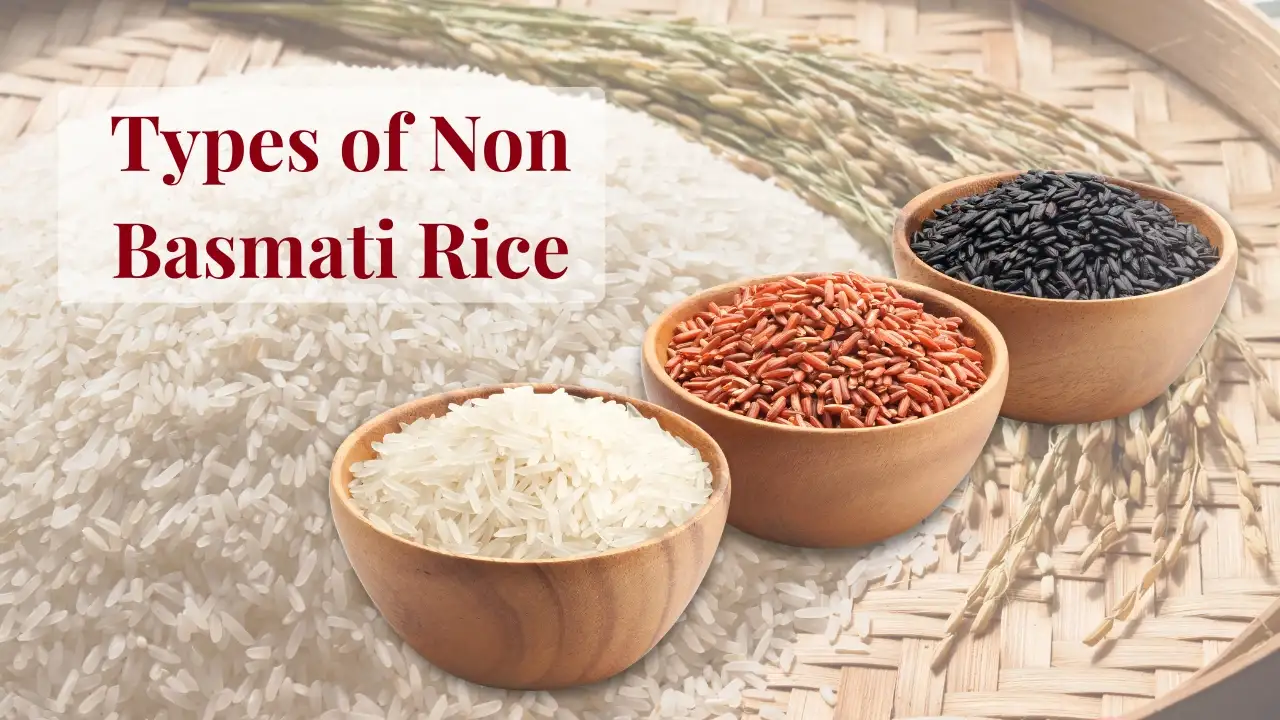
Non-basmati rice is a broad category that includes all rice varieties grown in India that are not Basmati.
It is not a single variety. It is a large and diverse group of rice that differ in grain length, aroma, texture, starch content, and growing region. Some are aromatic, some are not. Some have long grains, some are short and round. Some are grown for everyday home cooking, others for specific regional dishes and traditions.
The one thing they share is that none of them carry the GI-protected Basmati designation. Non-basmati varieties account for the majority of rice consumed across Indian households every day. They are also exported in large volumes to markets across Africa, the Middle East, and Southeast Asia making them just as commercially significant as Basmati, if not more so.
How Are Non Basmati Rice Varieties Classified?
Non-basmati rice is not one thing, it is a whole world of varieties. To make sense of it, rice is generally classified across five parameters:
- Grain length: Long, medium, or short the most common way to categorize rice
- Aroma: Some non-basmati varieties like Sharbati and Gobindobhog have a natural fragrance. Many others are neutral in smell.
- Region: Where the rice is grown shapes its characteristics. Punjab, South India, West Bengal, and Assam all produce distinctly different varieties.
- Usage: Some varieties are built for everyday cooking. Others are reserved for traditional dishes, sweets, or festive meals.
- Processing form: Most non-basmati varieties are available in both raw and steam form same grain, different processing.
Understanding these five parameters makes it much easier to identify and choose the right variety.
Types of Non Basmati Rice Based on Grain Length
Grain length is the simplest and most widely used way to identify a rice variety. Non-basmati rice falls into three categories:
Long Grain Non Basmati Rice
Long grain varieties are at least three times longer than they are wide. They cook firmly and separate easily. PR11, PR14, and IR64 are the most common examples widely grown across Punjab and other northern states.
Medium Grain Non Basmati Rice
Medium grain rice is shorter and slightly wider than long grain. It cooks softer and has a mild tendency to stick. Sona Masoori and Ponni are the best known examples of both staples across South Indian households.
Short Grain Non Basmati Rice
Short grain rice is almost round in shape. It is high in starch and cooks soft and cohesive. Jeera Samba is a well known example popular in Tamil Nadu for its distinct flavor and soft texture.
Popular Long Grain Non Basmati Rice Varieties
Long grain non-basmati rice is the most widely grown and consumed category in India. Here are the four most important varieties:
PR11 Rice
PR11 comes from Punjab and is one of India’s most produced non-basmati varieties. It has a long grain, firm texture, and mild aroma. It is commonly used in hotels, restaurants, and bulk cooking where consistent grain quality matters.
PR14 Rice
PR14 is also from Punjab. The grain is slightly shorter and softer than PR11. It cooks faster and has a lighter texture making it a popular choice for everyday household cooking across North India.
R64 Rice
IR64 was developed by the International Rice Research Institute and is now widely grown across India. It has a consistent grain, neutral flavor, and reliable cooking quality. It is one of the most used varieties for both domestic consumption and export.
Parmal Rice
Parmal rice comes from Punjab and Haryana. It is a medium-long grain variety with an affordable price point. It is widely used in food service, budget cooking, and large-scale meal preparation.
India’s Most Loved Aromatic Non Basmati Rice Varieties
Sugandha Rice
Sugandha rice has a mild, pleasant aroma and a long slender grain. It sits between regular non-basmati and Basmati in terms of fragrance and quality. For buyers who want an aromatic rice at an affordable price, Sugandha is one of the most popular choices in both domestic and export markets.
Sharbati Rice
Sharbati rice comes from the Sehore district of Madhya Pradesh. It is soft, slightly sweet in flavor, and naturally golden in appearance. Locally it is called the golden grain of MP. The grain is long and slender and cooks exceptionally soft making it a preferred everyday rice across central India.
Joha Rice
Joha rice comes from Assam in Northeast India. It is a short grain aromatic variety harvested in winter. The aroma is distinctive and the grain is prized in traditional Assamese cooking and festival meals. It is one of India’s most unique regional rice varieties.
Gobindobhog Rice
Gobindobhog comes from West Bengal. It is a short grain rice with a milky white appearance and a strong natural aroma. It is deeply rooted in Bengali culture used in traditional sweets, religious offerings, and festive cooking.
Rice That Powers South Indian Kitchens
Sona Masoori Rice
Sona Masoori comes from Andhra Pradesh and Telangana. It is a medium grain rice that is lightweight, low in starch, and easy to digest. It cooks soft and slightly cohesive perfect for everyday South Indian meals like rice and dal, curd rice, and sambar rice. It is the most consumed everyday rice variety across South India.
Ponni Rice
Ponni rice comes from Tamil Nadu. It is a medium grain variety that cooks soft and slightly sticky. The texture is smooth and comfortable to eat which is why it has been a staple in Tamil Nadu households for generations. It is commonly used for everyday meals and traditional Tamil cooking.
Matta Rice
Matta rice comes from the Palakkad region of Kerala. It is also called Kerala red rice because of its distinctive reddish-brown bran layer. The flavor is earthy and nutty, quite different from white polished rice. It has a higher mineral content and is popular among health-conscious consumers both in India and globally.
Where Each Non Basmati Rice Variety Comes From
India’s non-basmati rice varieties are deeply tied to the regions where they grow. Soil type, climate, and water conditions all shape how a grain develops which is why rice from Punjab tastes and cooks differently from rice grown in Kerala or Assam.
- North India — Punjab and Haryana This region produces some of India’s highest volume non-basmati varieties. PR11, PR14, and Parmal are all from here. The flat fertile plains and canal irrigation system make this region ideal for large-scale rice cultivation.
- South India — Andhra Pradesh, Telangana, and Tamil Nadu South India is home to everyday household varieties. Sona Masoori, Ponni, and Jeera Samba all come from this region. These varieties suit the local cuisine perfectly soft, light, and easy to digest.
- East India — West Bengal Gobindobhog is West Bengal’s most celebrated rice variety. It is deeply rooted in Bengali food culture and is grown in specific districts where the soil produces its characteristic aroma.
- Northeast India — Assam Joha rice is Assam’s prized aromatic variety. Grown in the winter season, it is one of the most distinctive and culturally significant rice varieties in the entire country.
Looking for Non Basmati Rice Supplier?
APEDA Certified · 50+ Countries · Custom Packing
How to Choose the Right Non Basmati Rice
Not sure which variety to pick? It comes down to three simple questions — what are you cooking, what texture do you prefer, and where do you live.
| If You Want | Choose |
|---|---|
| Soft everyday rice | Sona Masoori or Ponni |
| Aromatic but affordable | Sugandha or Sharbati |
| Traditional Bengali cooking | Gobindobhog |
| Northeast Indian dishes | Joha Rice |
| High volume budget cooking | PR11 or Parmal |
| Nutty health-focused rice | Matta Rice |
Every variety on this list has earned its place in Indian kitchens for a reason. The best rice is simply the one that suits what you are making.
Conclusion
India’s non-basmati rice is not one variety — it is hundreds. From the fragrant Gobindobhog of West Bengal to the everyday PR11 of Punjab, each variety carries its own identity, its own region, and its own place in Indian cooking. Non-basmati is not a lesser category. It is simply a different one — and for millions of people across India and the world, it is the rice that feeds them every single day.
For buyers and importers looking to source directly from India, choosing the right variety starts with understanding what each grain offers. Whether you need aromatic Sugandha for retail shelves or high-volume PR11 for bulk distribution, working with trusted non basmati rice exporters and suppliers ensures consistent quality, certified processing, and reliable shipment — every time.
FAQs
Q1: What are the different types of non basmati rice?
Ans: India grows hundreds of non-basmati rice varieties. The most popular ones include Sona Masoori, PR11, PR14, IR64, Parmal, Sugandha, Sharbati, Gobindobhog, Joha, Ponni, and Matta rice. Each variety differs in grain length, aroma, texture, and regional origin.
Q2: What are the 7 classifications of rice?
Ans: Rice is broadly classified by grain length (long, medium, short), aroma (aromatic and non-aromatic), processing method (raw and steam), color (white, brown, red), and subspecies (Indica and Japonica). Non-basmati rice falls across almost all of these categories.
Q3: Which non basmati rice varieties are aromatic?
Ans: Several non-basmati varieties have a natural aroma. The most well known are Sharbati, Sugandha, Gobindobhog, and Joha rice. Each has a distinct fragrance profile shaped by the region and soil where it is grown.
Q4: What makes each non basmati rice variety different from the others?
Ans: Each non-basmati variety is shaped by three things: where it is grown, its grain characteristics, and how it is processed. Soil, climate, and water conditions in each region produce grains with different textures, aromas, and cooking behaviors.