Not all rice is the same, and if you have ever stood in a store confused between two bags of rice, you are not alone. Basmati and non basmati rice look similar but behave very differently in your kitchen. In this article, you will find out how they differ in taste, texture, cooking style, nutrition, and which one actually suits your needs.
What is Basmati Rice?
Basmati rice is a long-grain rice known for its unique fragrance and light, fluffy texture after cooking. The name “Basmati” comes from Sanskrit, meaning “fragrant.” It has been grown for centuries in the foothills of the Himalayas and is considered one of the finest rice varieties in the world.
- Origin: Basmati rice originally comes from Punjab, Haryana, and Uttar Pradesh in India, as well as parts of Pakistan.
- GI Status: Indian Basmati holds a Geographical Indication (GI) tag, meaning only rice grown in specific Indian regions can legally be called Basmati.
- Grain Shape: The grains are extra long, slim, and elongate even further when cooked.
- Aroma: It has a natural, nutty fragrance caused by a compound called 2-acetyl-1-pyrroline.
- Texture: Cooked grains stay separate, never sticky or clumped together.
What is Non Basmati Rice?
Non basmati rice is a broad category that includes all rice varieties that are not basmati. These varieties come in different grain sizes, textures, and flavors depending on where they are grown. Non basmati rice is widely consumed across Asia and makes up the majority of global rice production and export. In fact, India exported over 20 million metric tons of non basmati rice in 2023, making it the largest rice exporter in the world.
- Definition: Any rice variety that does not meet the specific traits of basmati, such as aroma or grain length, falls under non basmati rice.
- Growing Regions: It is grown across South India, China, Thailand, Japan, Vietnam, and many other countries.
- Grain Sizes: Non basmati rice comes in short, medium, and long grain sizes depending on the variety.
- Affordability: It is generally cheaper than basmati, making it accessible for everyday cooking.
- Versatility: From sushi to biryani to rice porridge, non basmati varieties work across hundreds of different dishes worldwide.
Types of Basmati Rice
There are several basmati rice grain varieties grown and sold across India and Pakistan. Each one has its own distinct quality that makes it suitable for different cooking needs.
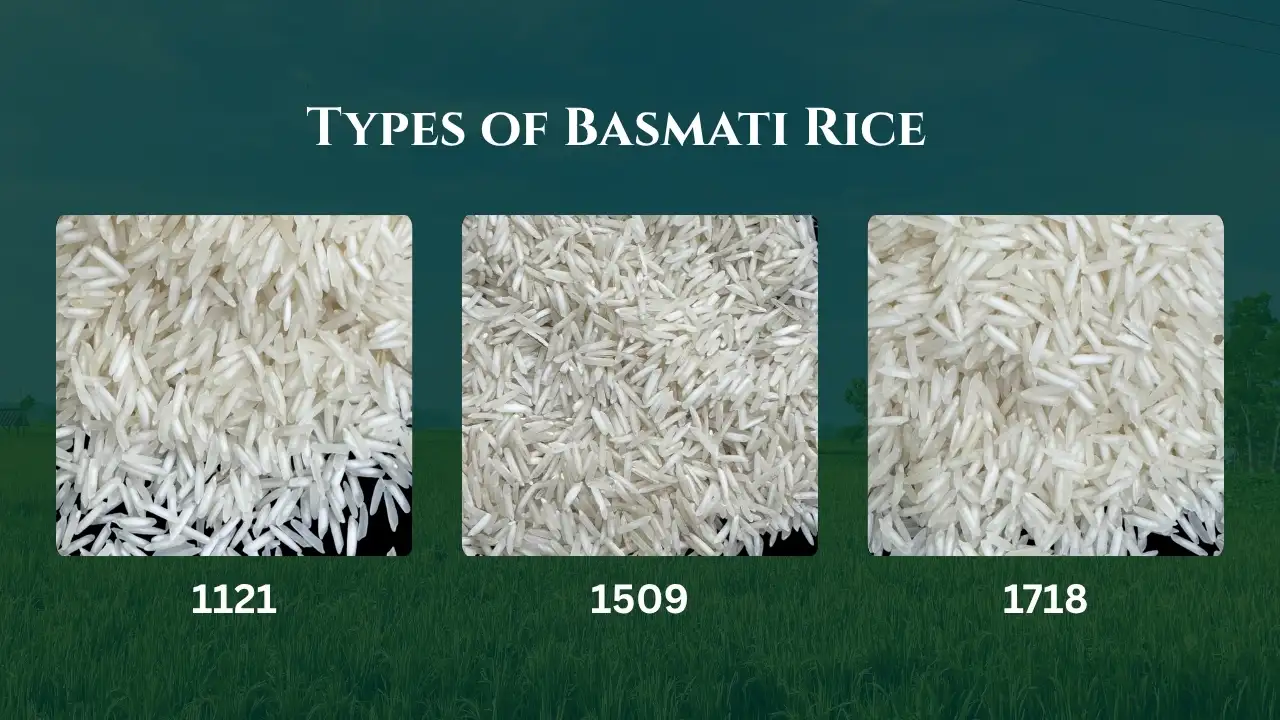
- Pusa 1121: Extra long grain, stays fluffy and separate after cooking, most popular for export.
- Pusa 1509 : Shorter cooking time, good aroma, widely used in daily cooking.
- Pusa 1718 : Newer variety, high yield, strong fragrance similar to traditional basmati.
- Mahi Suganda : Medium long grain, good fragrance, grown mainly in Madhya Pradesh.
- 1401 Golden Sella : Parboiled variety, golden color, firm texture, ideal for large gatherings and restaurants.
- 1509 Creamy Sella : Parboiled with a creamy white look, soft texture, popular in Middle East markets.
To explore each basmati variety in detail, check out our complete guide on Types of Basmati Rice.
Types of Non Basmati Rice
Non basmati rice varieties are grown across different states and countries, each with its own texture, taste, and best use in cooking.
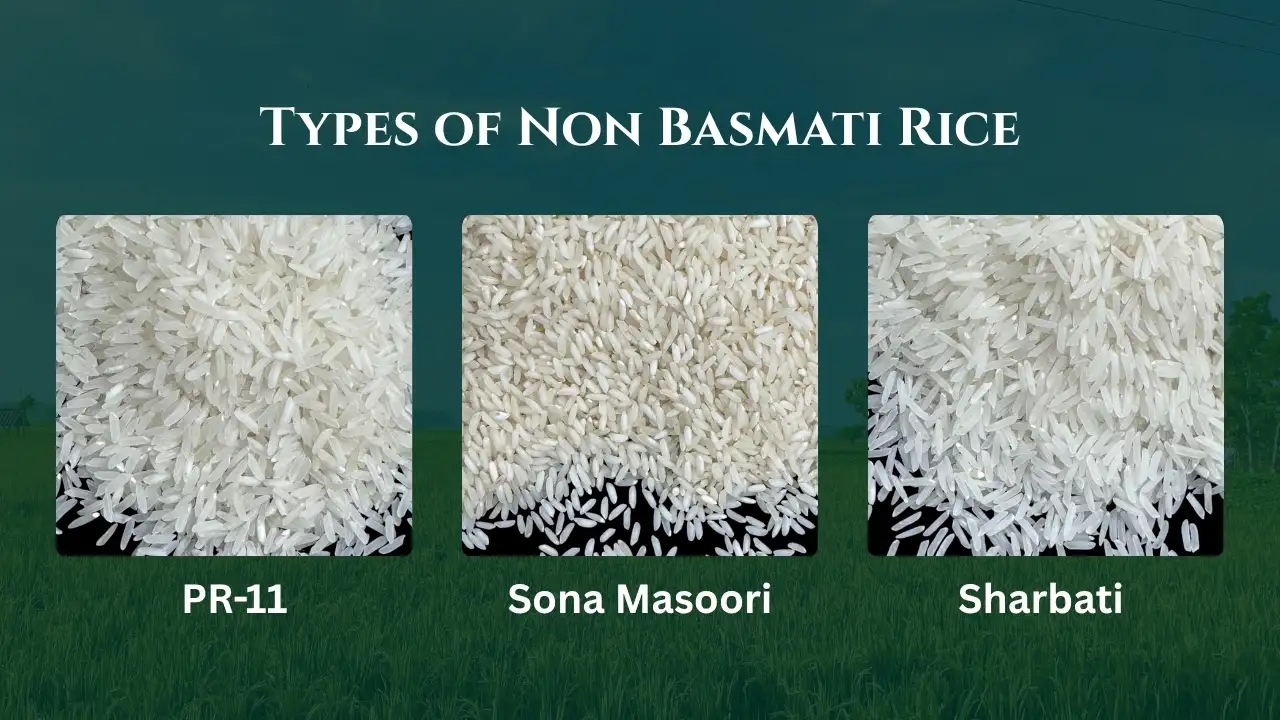
- Sona Masoori: Lightweight, low starch, very popular in South India for everyday meals.
- Sharbati : Slightly shorter grain, mild aroma, affordable and commonly used in households.
- Ponni: Soft and easy to digest, widely used in Tamil Nadu for rice and idli.
- Gobindobhog: Short grain, mild sweet aroma, traditional Bengali variety used in special dishes.
- PR-11: Medium long grain, no aroma, one of the most commonly traded non basmati rice varieties in India.
- IR-64: Thin long grain, slightly aromatic, exported in large quantities to Africa and Asia.
- Jeera Samba: Small grain with a jeera-like smell, popular in South Indian temple cooking.
- Matta Rice: Red parboiled rice from Kerala, high in fiber, nutty flavor, very filling.
Basmati and Non Basmati Rice – Key Differences
| Aspect | Basmati Rice | Non Basmati Rice |
|---|---|---|
| Grain Length | Long, 6-7mm | Short to long, 2-7mm |
| Aroma | Strong, natural fragrance | Mild or neutral |
| Texture | Fluffy, separate grains | Sticky or firm |
| Flavor | Subtle, nutty | Neutral, absorbs flavors |
| Price | Premium | Affordable |
| Best Used For | Biryani, pulao, dum dishes | Idli, sushi, khichdi, fried rice |
| Origin | North India, Pakistan | South India, Asia globally |
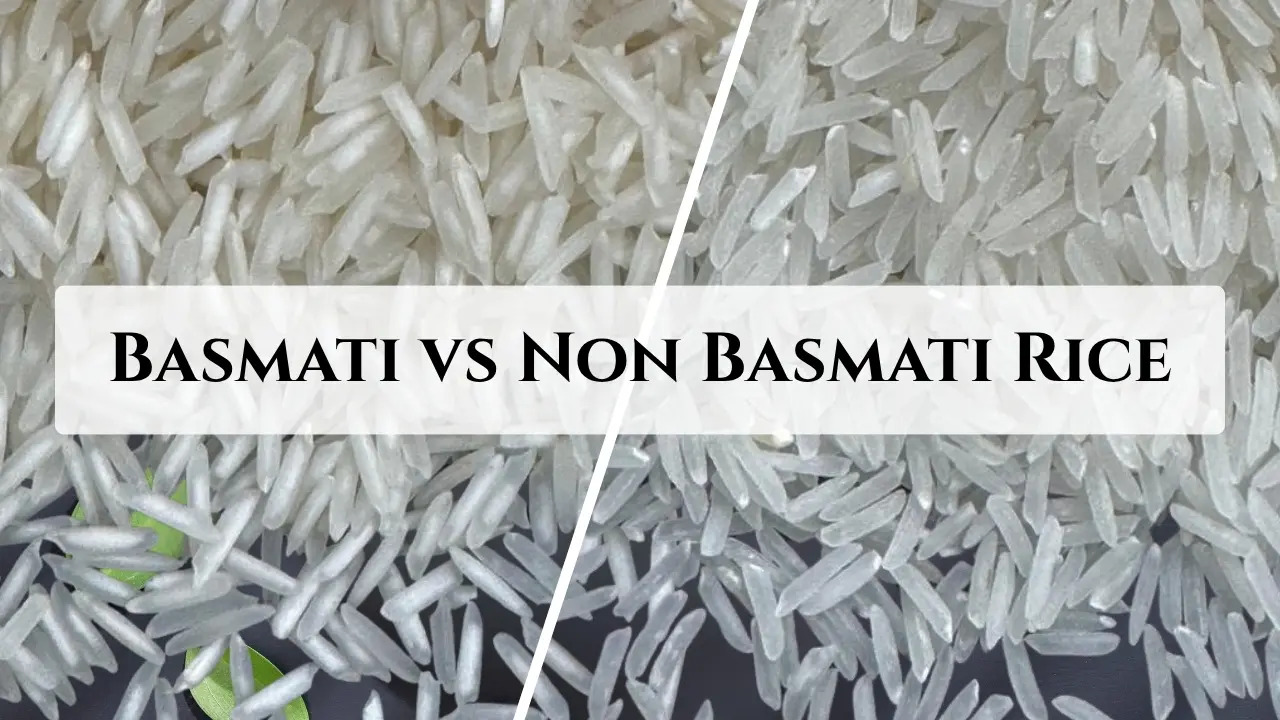
Basmati and non basmati rice differences go beyond just price and looks. Basmati is the go-to choice when aroma, grain length, and a premium finish matter in a dish. Non basmati rice, on the other hand, is more flexible, budget friendly, and works well across a wide range of everyday recipes. Choosing between the two really depends on what you are cooking and what result you want on the plate.
Basmati Rice vs Normal Rice – Which is Better?
When it comes to basmati rice vs normal rice, there is no single winner. Both have their place in the kitchen. The better choice depends on your dish, your budget, and the texture or flavor you are going for.
Choose Basmati When:
- You are cooking biryani, pulao, or dum-style dishes where long, separate grains matter.
- Aroma and presentation are important, like at weddings, restaurants, or special occasions.
- You want rice that looks and smells premium on the plate.
- The recipe needs grains that do not clump or stick together after cooking.
Choose Non Basmati When:
- You need daily cooking options that are easy on the budget.
- You are making South Indian dishes like idli, dosa batter, or Pongal.
- The recipe needs a sticky or soft texture, like sushi, kheer, or risotto.
- You are cooking in large quantities for a crowd or simple home meals.
Health Benefits of Basmati vs Non Basmati Rice
Both types of rice offer real nutritional value. The right choice depends on your health goals and daily needs
Health Benefits of Basmati Rice
- Low Glycemic Index (GI): Basmati has a lower GI than most rice varieties, which means it releases sugar slowly into the blood, making it a better option for diabetics.
- Gluten Free: Naturally gluten free, safe for people with gluten sensitivity or celiac disease.
- Easy to Digest: Light on the stomach, making it suitable for people with digestive issues.
- Less Starchy: Lower starch content means it does not spike blood sugar as quickly as other rice types.
Health Benefits of Non Basmati Rice
- High Energy Source: Higher carbohydrate content gives quick energy, useful for physically active people.
- Fiber Rich Options: Brown non basmati varieties are high in fiber, supporting better gut health.
- Affordable Nutrition: Provides good carbohydrates and essential minerals at a much lower cost.
Which Rice is Best for Which Dish?
Picking the right rice for the right dish makes a big difference in taste and texture. Here is a simple breakdown.
Best Uses of Basmati Rice
- Biryani and Pulao: Long, fluffy grains stay separate and soak up spices beautifully.
- Fried Rice: Firm texture prevents grains from turning mushy during stir frying.
- Middle Eastern Dishes: Varieties like Mandi and Kabsa rely on basmati for their signature look and aroma.
- Kheer: Basmati adds a subtle fragrance to this classic rice pudding.
Best Uses of Non Basmati Rice
- Idli and Dosa Batter: Short grain non basmati gives the right fermentation and softness.
- Khichdi and Dal Chawal: Soft, slightly sticky texture blends well with lentils.
- Sushi and Risotto: Short grain sticky varieties are essential for these dishes.
- South Indian Meals: Ponni and Sona Masoori are everyday staples across South India.
FAQs
Q1: What is the main difference between basmati and non basmati rice?
Ans: Basmati has a long grain, strong aroma, and fluffy texture. Non basmati comes in various sizes, has little to no aroma, and is more affordable.
Q2: Is basmati rice healthier than non basmati rice?
Ans: Basmati has a lower GI and is easier to digest. Non basmati offers more energy and fiber in brown varieties. Both are healthy depending on your needs.
Q3: Why is basmati rice more expensive than non basmati rice?
Ans: Basmati grows only in specific regions, has a GI tag, and takes longer to mature, which makes it naturally more expensive to produce and export.
Q4: Can I use non basmati rice for biryani?
Ans: You can, but the result will differ. Non basmati grains turn softer and stickier, so the biryani will lack the signature separate, fluffy texture.
Q5: Which rice is better for weight loss — basmati or non basmati?
Ans: Basmati is better due to its lower GI and less starch. It keeps you full longer without spiking blood sugar quickly.
Conclusion
Understanding the difference between basmati and non basmati rice helps you make smarter choices in the kitchen and while shopping. Basmati wins on aroma, grain quality, and presentation. Non basmati wins on affordability, versatility, and everyday use. Neither is inferior, both serve a purpose depending on your dish and budget. If you are looking for premium quality basmati or bulk non basmati rice for export or retail, explore trusted suppliers who offer certified, farm fresh varieties directly.