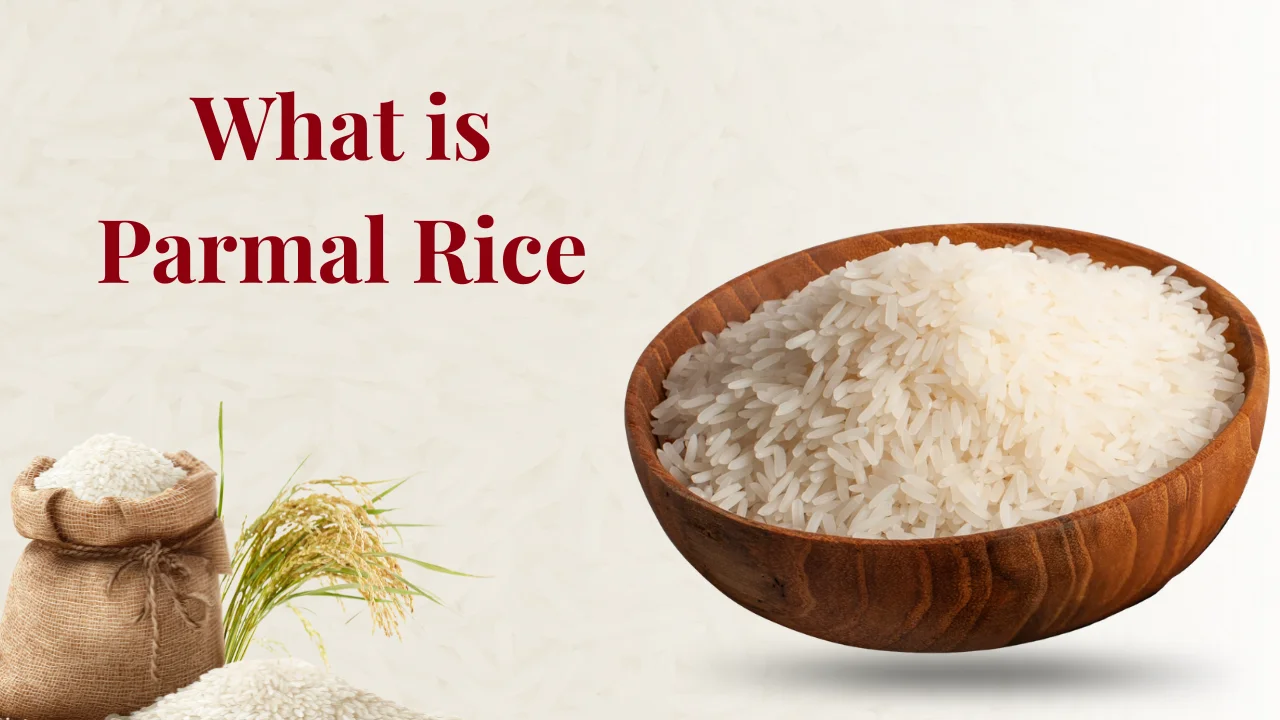
Parmal rice is a non-basmati, long to medium grain rice variety grown widely across northern India. It is known for its neutral taste, affordable price, and everyday use in Indian households. Many people search for parmal rice meaning because it is often confused with other non-basmati varieties sold in local markets.
Here we look at the parmal rice meaning and where the name comes from, what makes it good for daily meals, its nutrition profile, and how it is used in Indian kitchens.
Parmal Rice Meaning
Parmal rice is a non-basmati, long-grain rice variety grown mainly in Punjab, Haryana, and Uttar Pradesh. The name parmal comes from the PR variety codes used for these rice strains, such as PR-11 and PR-14, which are common cultivars grown in this belt. Over time, PR became parmal in everyday use, and the name stuck as a common term for this rice across North India.
So what is parmal rice in simple terms? It is a non-aromatic, non-basmati rice with a neutral taste, unlike basmati, which has a distinct aroma and longer grains. In many regional markets, it is also called parmal chawal.
Parmal rice is priced lower than basmati, which makes it a practical choice for daily meals rather than special occasions. Its grains are shorter and less slender compared to basmati, but they cook up soft and are easy to digest. JMB Agro supplies both raw and sella Parmal rice in bulk. Check our Parmal Rice specs and pricing for export and wholesale orders.”
Parmal Rice Benefits
Parmal rice fits well into daily meals because of how it is digested and used across age groups. Here are the key parmal rice benefits:
- Easy to digest: Its soft texture after cooking makes it suitable for children, elderly people, and those recovering from illness.
- Low in fat: Like most rice varieties, parmal rice is naturally low in fat, making it a light option for regular meals.
- Gluten-free: It fits into gluten-free diets, as rice does not contain gluten.
- Good source of energy: Being carbohydrate-rich, it provides quick energy, which is why it is a staple in most Indian households.
- Supports digestion: Its fiber content can help with regular digestion when eaten as part of a balanced diet.
- Budget-friendly staple: Compared to basmati, parmal rice is more affordable, making it practical for daily consumption in both households and institutions.
Parmal Rice Nutritional Value
Like other non-basmati rice varieties, parmal rice is primarily a source of carbohydrates, with smaller amounts of protein and fiber. It is naturally low in fat and does not contain gluten, which makes it easy to include in most diets. Here is an approximate breakdown of parmal rice nutritional value per 100g (raw):
| Nutrient | Approx. Value (per 100g, raw) |
|---|---|
| Energy | ~345–360 kcal |
| Carbohydrates | ~78–80 g |
| Protein | ~7–7.5 g |
| Fat | ~0.5–1 g |
| Dietary Fiber | ~1–3.5 g |
Because it is a staple grain, parmal rice is best understood as an energy-dense food rather than a source of micronutrients. It works well as part of a balanced meal alongside dal, vegetables, and other protein sources that fill in the nutritional gaps.
Parmal Rice Uses
Parmal rice is a common choice for daily cooking because it holds up well across different dishes without needing special preparation. Some of the most common parmal rice uses include:
- Steamed rice and dal-chawal: The most basic and everyday use, served alongside lentils and vegetables.
- Khichdi: Its soft texture makes it a good fit for khichdi, especially for children and elderly family members.
- Pulao and simple biryani: Used in home-style pulao and lighter biryani preparations where a strong aroma is not the main requirement.
- Fried rice: Works well for fried rice since the grains cook evenly and are not overly sticky.
- Idli and dosa batter: In some regions, parmal rice is ground and used in idli or dosa batter.
- Bulk and institutional cooking: Its affordability makes it a preferred choice for catering, hostels, and public distribution schemes.
This range of uses is one of the main reasons parmal rice remains a kitchen staple across North Indian households, from everyday meals to large-scale cooking.
FAQs
Q1: What is parmal rice called in English?
Ans: Parmal rice does not have a separate English name. It is generally referred to as non-basmati long-grain rice in English-speaking markets.
Q2: Is parmal rice good for daily use?
Ans: Yes, parmal rice is commonly used for daily meals due to its neutral taste, affordable price, and easy-to-digest texture across age groups.
Q3: Which is better, parmal rice or basmati rice?
Ans: Neither is better overall. Basmati offers aroma and length, while parmal rice is more affordable and suited for everyday, non-aromatic cooking needs.
Q4: Is parmal rice boiled or not?
Ans: Parmal rice is available in both raw and sella (parboiled) forms. The parboiled version is partially boiled before milling to improve texture.
Q5: Is parmal rice good for biryani?
Ans: Yes, parmal rice can be used for simple, home-style biryani, though it lacks the strong aroma and length that basmati rice typically offers.
Q6: Is parmal healthy?
Ans: Parmal rice is generally considered a light, easy-to-digest grain. It fits into a balanced diet alongside vegetables, dal, and other protein sources.