Basmati rice can turn out long and separate one day, and sticky or hard the next, with the same rice. In most cases, the difference is the water. The basmati rice water ratio is not one fixed number. It shifts with soaking, rinsing and the vessel you cook in. Below, you’ll find how much water for basmati rice each method needs, followed by the exact cooking steps.
Basmati Rice Water Ratio at a Glance
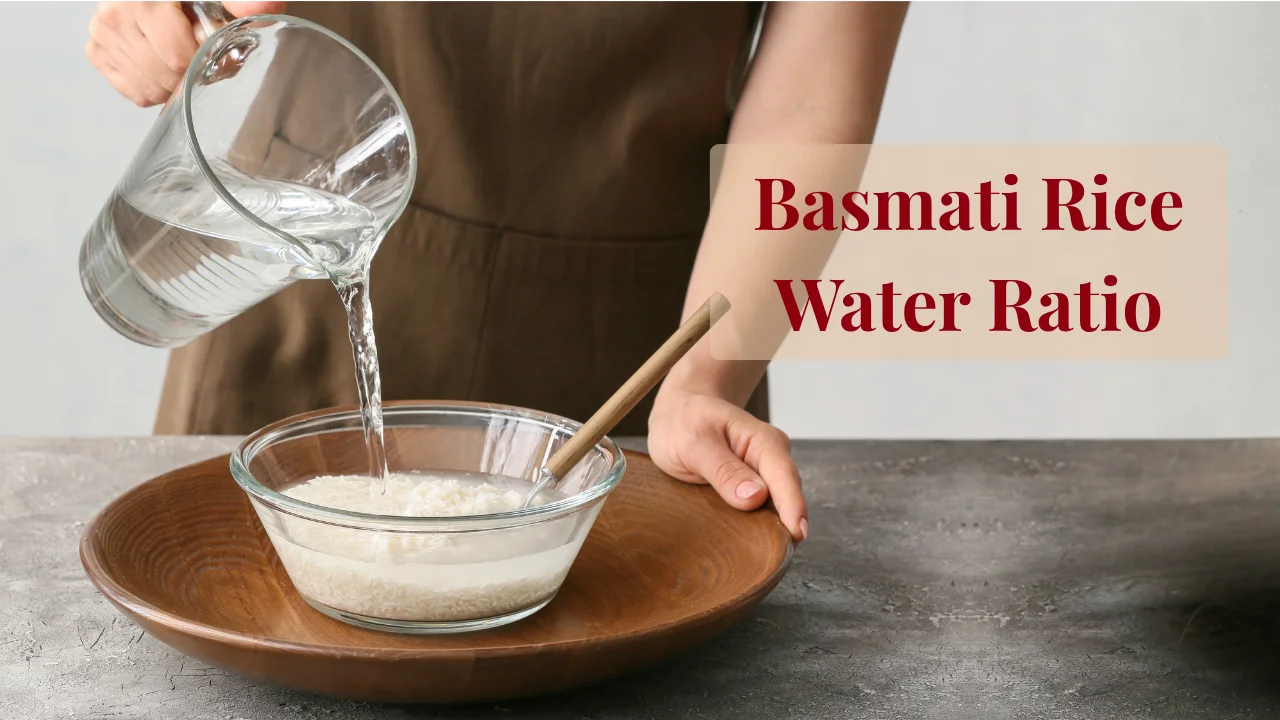
Use 1 cup of unsoaked basmati rice with 1.5 cups of water. If the rice is soaked for 30 minutes, use 1.25 cups of water. Measure both the rice and water using the same cup to maintain an accurate rice-to-water ratio. For basmati rice measurements in grams, 1 cup of uncooked rice weighs approximately 185–200 grams. One cup of uncooked basmati rice makes about 3 cups of cooked rice, which is enough for 2–3 people.
Before You Cook: Rinse and Soak
Rinse the rice in a bowl of cold water, swirl it gently and drain. Repeat 3 to 4 times until the water looks almost clear. This washes off surface starch that makes grains stick together. Then soak it for 30 minutes. Soaked grains cook more evenly and stretch longer. Since they have already absorbed some water, reduce the water quantity when you cook.
How to Cook Basmati Rice: Step by Step
Each method has its own process, so pick what suits your kitchen. The first three use the absorption method, where rice absorbs all the water. For all three, use 1.5 cups of water per cup of unsoaked rice, or 1.25 cups if it is soaked.
On the Stovetop
For cooking rice in a saucepan, use one with a heavy base and tight lid. Pick a size where the rice sits in an even layer, since an overfilled pan cooks unevenly.
- Add the rice, water, a pinch of salt and a teaspoon of ghee or oil (optional).
- Bring it to a boil without the lid.
- Lower the heat, cover and cook for 12 to 15 minutes. Do not lift the lid.
- Turn off the heat and let it rest, covered, for 5 to 10 minutes.
- Fluff gently with a fork to keep grains whole.
- Starting to finish, basmati rice cooking time is about 25 to 30 minutes.
In a Pressure Cooke
The basmati rice water ratio in a pressure cooker stays the same, since a closed cooker loses very little water to steam.
Here is how to cook basmati rice in cooker:
- Rinse, soak and drain the rice.
- Heat a teaspoon of ghee, add the rice and the measured water.
- Close the lid and cook on medium heat. As for how many whistles for basmati rice, 1 is enough for soaked rice.
- Turn off the heat and let the pressure drop on its own, about 10 minutes.
- Open, fluff gently and serve. Extra whistles overcook the grains and make them mushy.
In a Rice Cooker
Many cookers come with a cup smaller than a standard one. The basmati rice cooker water ratio only works if you use that same cup for both rice and water.
Add the rice and water and choose the white rice setting. After the cycle, rest it for 5 minutes and fluff.
What Can Change the Basmati Rice Water Ratio
A few things can shift these ratios.
- Old vs new rice: New rice holds more moisture and needs slightly less water than aged rice.
- White vs brown: The ratios above are for white basmati rice. Brown basmati needs about 2 cups of water per cup and longer cooking.
- Batch size: Water does not scale evenly. For large batches, reduce it slightly.
- Pot and lid: A wide pot or loose lid loses more steam, so add a little extra water.
FAQs
Q1: What is the golden ratio for rice to water?
Ans: There is no single golden ratio for all rice. For basmati, 1 part rice to 1.5 parts water is a reliable starting point.
Q2: Is it 2 cups of water per 1 cup of rice?
Ans: Not for basmati. Two cups of water usually makes it soft and sticky. Use 1.5 cups for unsoaked rice or 1.25 cups if soaked.
Q3: How much water for 1 kg of basmati rice?
Ans: One kg is roughly 5 cups of rice, so use about 7 to 7.5 cups of water. Use slightly less if the rice is soaked.
Q4: Is 1/2 cup dry rice equal to 1 cup cooked?
Ans: No, it makes more. Half a cup of dry basmati gives about 1.5 cups of cooked rice, since the grains roughly triple in volume.
Q5: Should I soak basmati rice before cooking?
Ans: It is not required, but soaking for 30 minutes helps the grains cook evenly and grow longer. Just reduce the water slightly afterwards.