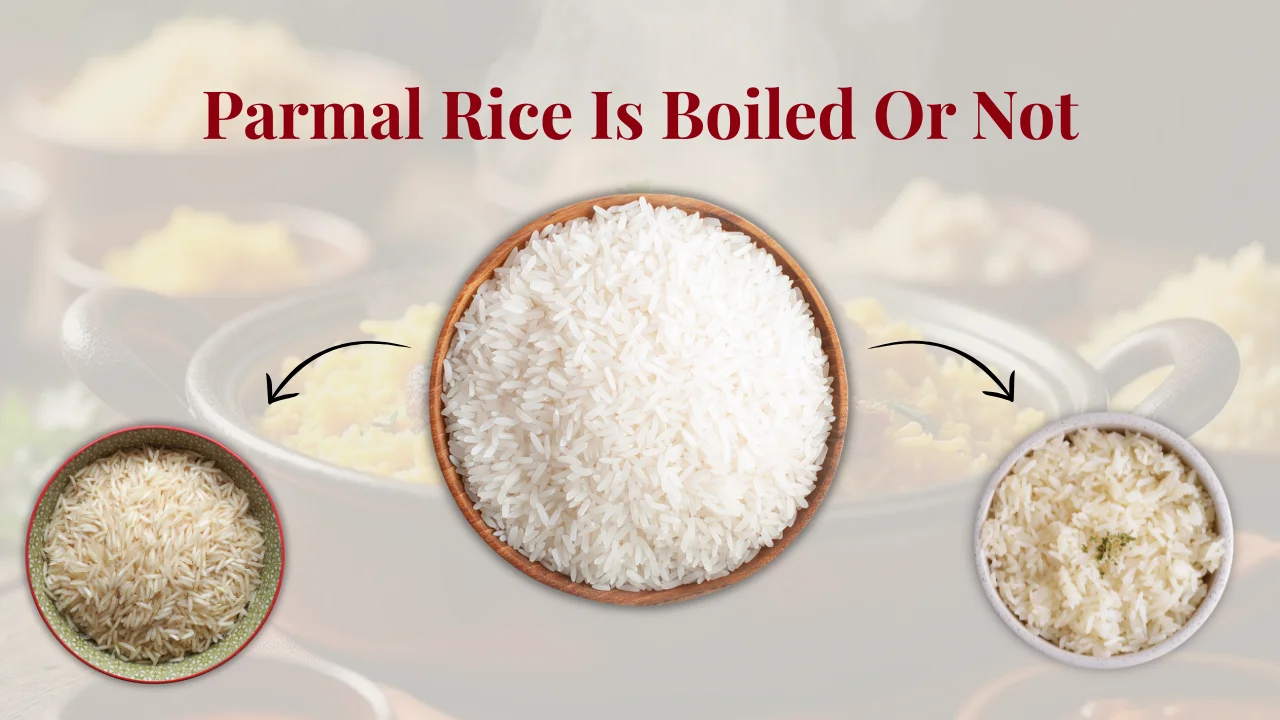
Parmal rice does not always look the same in the market. Some packs have bright white grains, while others look creamy or light golden. This difference makes many buyers wonder whether parmal rice is boiled or not. In local markets, people often phrase the same doubt as “parmal rice is arwa or not.” Below, we explain the forms of Parmal based on how it is processed. For the basics of this grain, read our guide on what Parmal rice is.
Is Parmal Rice Boiled Rice?
It can be either. Parmal is a rice variety, not a processing type. So whether parmal rice is boiled or not depends on what is done to the paddy before it is milled. In many Indian markets, rice is commonly sorted as arwa or usna. Arwa means raw rice, milled without any soaking or steaming. Usna refers to parboiled rice, where the paddy is soaked and heated before milling. In the market, Parmal is mainly sold in three forms: raw, steam, and sella. Each form is processed differently, which changes how the grain looks and cooks.
Types of Parmal Rice Based on Processing
What Is Parmal Raw Rice?
In this form, the paddy is dried and milled without any soaking or steaming. Many people assume raw rice is unprocessed, but that is not true. The husk is still removed and the grain is polished. It only skips the boiling stage. This is the arwa version. Parmal raw rice stays white and cooks up soft, with a slightly sticky texture. It suits dishes where a softer, homely bite is preferred.
What Is Parmal Steam Rice?
Here, the paddy is given a light steaming before it is dried and milled. It is not fully parboiled like sella, so the change in the grain is mild. The colour stays close to white or off-white. After cooking, parmal steam rice is firmer than the raw form and the grains stay more separate. It is a good middle ground for buyers who find raw rice too soft but sella too firm.
Parmal Sella Rice
This is the fully parboiled form. The paddy is soaked in water, steamed, dried, and only then milled. The process makes the grain harder and helps it stay whole during cooking. When buyers ask “is parmal rice parboiled”, this is the form they mean. It is the usna type, and the grains turn creamy or light golden after processing. Sella is sold in two common shades. Creamy sella goes through lighter steaming and stays pale, while golden sella is steamed for longer and gets a deeper yellow colour.
How to Identify Raw, Steam and Sella Parmal
Once you know how each form is made, telling them apart at the shop becomes easier. A few simple checks help. Start with colour. Raw and steam grains look white or off-white, while sella has a creamy to golden tone. Next, look closely at the grain. Sella grains often have a slight shine and look a little translucent, unlike raw grains. Raw and steam can look very similar, so the packet label is the surest check. Cooking also gives it away, as sella grains stay the most separate.
Which Form of Parmal Rice Should You Choose?
Knowing whether parmal rice is boiled or not matters most when you pick a form for your own needs. Choose raw if you like soft rice for everyday home meals. Steam suits daily cooking when you want grains that stay separate but are not too firm. Sella is the better pick for large-batch cooking, as its grains hold their shape even when cooked in bulk or kept warm for long. This is why caterers, institutions, and export buyers often prefer sella.
Conclusion
Parmal is not one fixed type of rice. It is sold raw, lightly steamed, or fully parboiled, and each form cooks differently. When buying, check the packet label to know which form you are getting. Then pick the one that fits how you cook, from soft rice at home to firm grains for bulk meals.