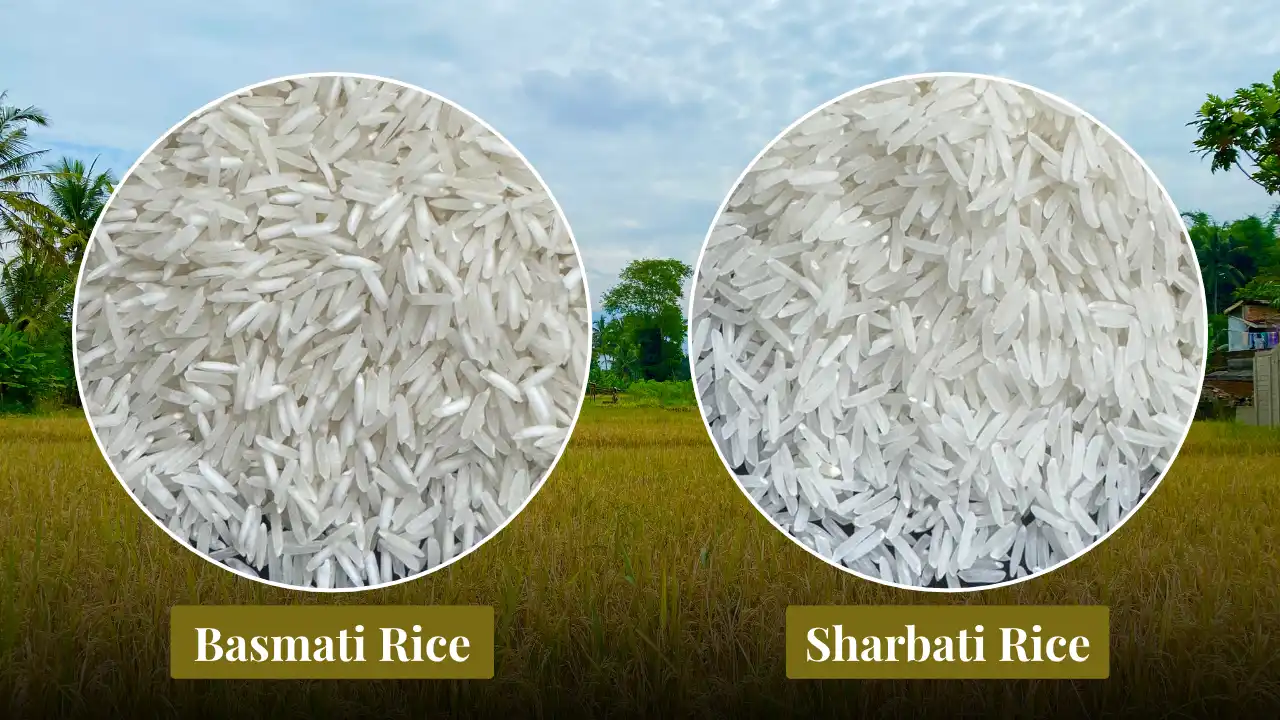
You are standing in a rice shop, looking at two bags of long, slim rice. They look almost the same, yet one costs far more than the other. This is where the difference between basmati and sharbati rice starts to matter. Many packs carry the name “Sharbati Basmati,” which makes the choice even harder. But that is a trade label, not an official category. The confusion exists because both look alike on the shelf, so the names get mixed up.
Is Sharbati Rice the Same as Basmati?
Basmati has a clear rule. FSSAI’s Basmati standard says it must be an officially notified Basmati variety with a natural aroma, both in raw and cooked rice.
Sharbati is not named in that standard, and many sellers list it as non-Basmati. Sharbati is generally a non-Basmati long-grain rice trade name unless a specific lot is verified as a notified Basmati variety. So do not trust the name on the bag alone. Ask the seller for the variety name and proof that it is pure before you pay a Basmati price.
Key Difference Between Basmati and Sharbati Rice
Here is the quick side-by-side view of both rice types. Read it row by row to see where they match and where they do not.
| Row | Basmati Rice | Sharbati Rice |
|---|---|---|
| Official status | Notified variety under FSSAI | No FSSAI or APEDA Sharbati standard |
| GI tag | GI registered, effective 5 Feb 2016 | No GI status verified |
| Grain length | APEDA minimum 6.61 mm milled, L/B ratio at least 3.5 | Varies by lot, no official figure |
| Cooked length | At least 12 mm, elongation ratio at least 1.70 | No official benchmark |
| Aroma | Natural aroma required | Varies by mill and age |
| Texture | Soft, fluffy, non-sticky | Often sold as fluffy, varies by lot |
| Best use | Biryani, pulao, festive meals | Daily and bulk cooking |
Which Rice Is Good: Sharbati or Basmati?
The best rice depends on what you are cooking and what you want to spend. Here are three common questions, one by one.
Which Rice Expands More After Cooking?
Basmati has a clear benchmark here. APEDA’s Basmati quality characteristics set a cooked grain length of at least 12 mm and an elongation ratio of at least 1.70. In simple words, cooked Basmati grains must stretch a lot in length. For Sharbati, no official figure exists, so it is not fair to say it expands more or less.
Best for: Basmati, when you want long, separate cooked grains.
Which Rice Is More Flavourful?
If you are asking about the difference between basmati and sharbati rice taste, aroma is the main point. Basmati must have a natural aroma in both raw and cooked rice. Sharbati can be milder, and its flavour varies by mill, age and cooking method. Taste is personal, so try a small pack of each before you decide.
Best for: Basmati, when aroma is the highlight of the dish.
Which basmati and sharbati rice is best for daily usage?
Sharbati is a practical, lower-cost choice for everyday and large-batch cooking. Basmati suits special-occasion biryani and pulao. Still, portion size and the rest of the meal matter more than the rice name.
Best for: Sharbati rice for daily meals and big batches, Basmati for special dishes.
Sella Rice, Golden Sella Rice and Steam Rice: What the Labels Mean
Confused by the labels on the pack? Sharbati is sold in raw (white), steam, sella and golden sella forms. Basmati is also sold in raw, steam and sella forms. These words describe how the rice was processed. They do not name a variety. Sella means the rice was partly boiled in its husk before milling, not that it is aged. APEDA requires Basmati samples to be aged for three months before testing, and that is separate from sella processing.
| Label | Meaning |
|---|---|
| Raw or White | Regular rice that is not partly boiled before milling |
| Steam | A processing type, not a variety |
| Sella | Rice partly boiled in its husk before milling, also called parboiled, not aged rice |
| Golden Sella | A colour and processing term, not a separate variety |
Why Sharbati Rice Gets Mixed Up With Basmati Rice
Both are long-grain rice, so they look alike on the shelf. A grain of Sharbati can easily pass for Basmati at a quick glance. A PWIP video on this topic says Sharbati is classed as non-Basmati in the rice trade. The video also claims that mixing it with Basmati to cut cost is common. That mixing point is the video’s claim, not a verified fact.
Conclusion
Basmati and Sharbati are both long-grain rice, but they are not the same thing. Basmati must be a notified variety with a natural aroma, while Sharbati is generally a non-Basmati trade name unless a lot is verified. Choose Basmati for biryani, pulao and festive meals where aroma and long grains matter. Choose Sharbati for daily meals and large batches when cost matters more. Whichever you buy, check the variety name, supplier details and purity declaration on the pack, and do not pay a Basmati price for a name alone.