Basmati rice holds a distinct place among rice varieties because of its long grain, natural aroma, and fluffy texture after cooking. It is grown mainly in the Indo-Gangetic plains of India and Pakistan, where the soil and climate suit its unique characteristics.
Over the past few years, the basmati rice market has expanded beyond South Asia, with rising demand in North America, Europe, and the Middle East. Consumers in these regions are showing more interest in aromatic, high quality rice as part of their regular diet. This growing appetite has turned basmati rice into a product with strong export value.
Global Basmati Rice Market Size & Growth
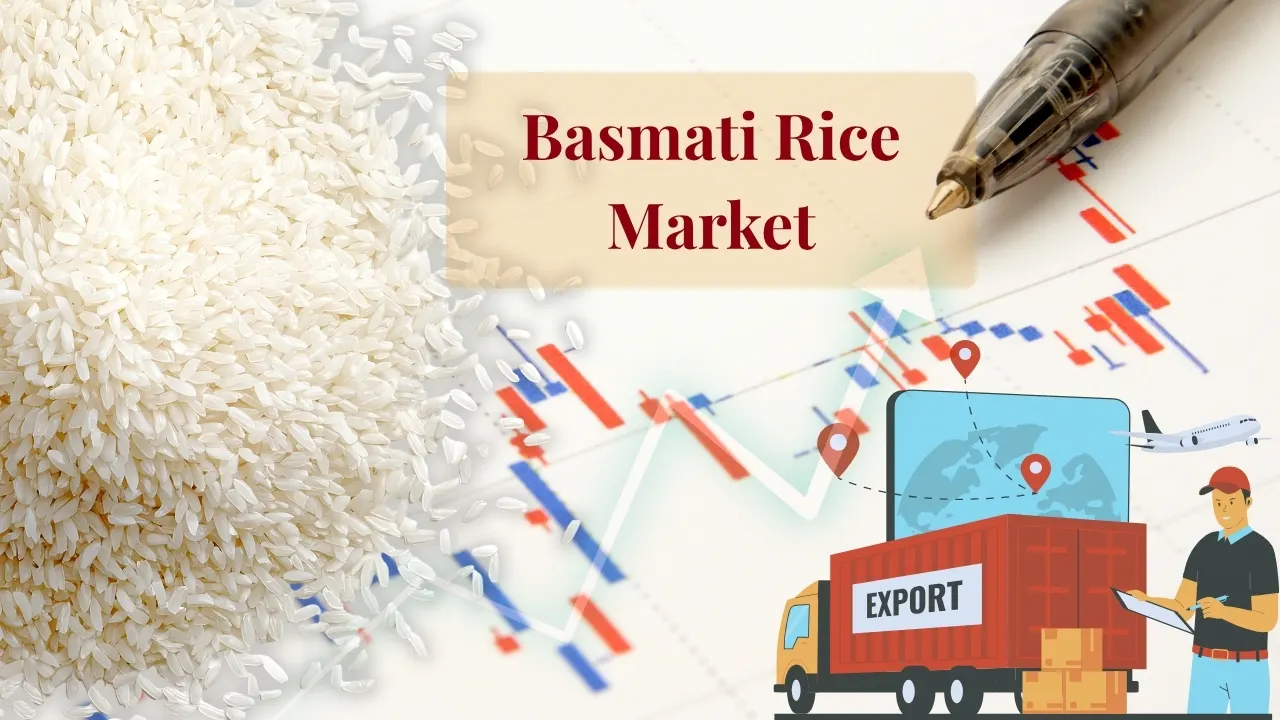
Market research reports place the global basmati rice market size somewhere between USD 15 billion and USD 27 billion, depending on the base year and scope used by each firm. Growth projections also vary, with compound annual growth rate (CAGR) estimates ranging from 9% to 11% over the next decade. This gap exists because different research firms use different data sources, regional coverage, and forecast methods.
Despite the variation in exact figures, all reports agree on one point: the basmati rice market is growing steadily. This growth is driven by rising global demand and a shift toward premium, branded rice products. Consumers are increasingly willing to pay more for quality, aroma, and authenticity.
Basmati Rice Market Share in India
India holds the largest share in the global basmati rice market share in india discussion, largely due to its favorable growing conditions. States like Punjab, Haryana, and Uttar Pradesh have the right soil composition, climate, and water availability needed for basmati cultivation. Farmers in these regions have generations of experience growing specific basmati varieties known for their grain length and aroma, such as PUSA 1121 and 1509.
This combination of natural advantage and farming expertise has made India the top basmati rice exporter in the world. A large share of India’s total rice exports comes from basmati varieties alone, with major buyers located in the Middle East, Europe, and North America. Government support through export promotion bodies has also helped Indian basmati reach new international markets. Well established trading networks and processing infrastructure further strengthen India’s position as the leading global supplier.
Rice Industry in India: Production & Export Base
The rice industry in India is one of the largest in the world, covering both non-basmati and basmati varieties across multiple states. Within this broader industry, basmati rice occupies a premium segment, known for its higher price point and export demand compared to regular rice.
Organizations like APEDA (Agricultural and Processed Food Products Export Development Authority) play a key role in supporting basmati exports through quality certification, market development, and trade facilitation. This institutional support has helped Indian basmati maintain consistent quality standards in international markets.
India and Pakistan remain the only two countries producing authentic basmati rice, given the geographical and climatic requirements specific to this variety. While both countries export basmati, India holds a considerably larger share of global trade in this category.
Key Growth Drivers
Several factors are pushing demand higher in the basmati rice market. Health conscious consumers are choosing basmati rice over regular white rice because of its comparatively lower glycemic index, making it a more suitable option for those watching their carbohydrate intake.
Population growth in urban and semi urban areas is also adding to overall rice consumption, with more households moving toward branded and packaged rice for convenience and quality assurance. Alongside this, there is a clear shift toward premium food choices, as rising incomes allow consumers to spend more on quality staples.
Organic basmati rice is gaining attention among buyers who prefer chemical free farming practices. At the same time, value added products like ready to cook biryani kits and flavored rice blends are creating new demand within the packaged food segment.
Sourcing Premium Basmati Rice for Your Business?
JMB Agro exports premium Basmati rice varieties including 1121, 1509, 1401 and Pusa Basmati to 25+ countries, backed by ISO, FSSAI, HACCP and HALAL certification.
Challenges Facing the Market
Climate change poses a real challenge to basmati rice production. Unpredictable rainfall and temperature shifts during the growing season can affect crop yield and grain quality, making harvests less consistent year to year.
Supply chain issues add another layer of difficulty. Delays in transportation, port congestion, and inefficient distribution networks can disrupt the timely movement of basmati rice from farms to international buyers, sometimes leading to shortages in certain markets.
Price volatility affects both ends of the chain. Farmers face uncertainty over input costs like labor and fertilizer, while consumers deal with fluctuating retail prices, particularly during periods of low supply or high export demand.
Future Outlook
Sustainable and organic farming practices are expected to shape the future of basmati cultivation. More farmers are exploring water efficient irrigation methods and reduced chemical usage, partly due to rising buyer interest in organic certification and partly due to long term soil health concerns.
Online retail is becoming a bigger part of how consumers buy rice. E-commerce platforms and quick commerce apps are making it easier for households to order specific basmati brands and varieties directly, without depending only on traditional grocery stores.
Value added products are likely to see continued growth as well. Ready to eat meals, pre-mixed biryani kits, and flavored rice options are attracting consumers who want convenience without giving up on quality or taste. These trends point toward a market that is diversifying beyond just raw grain sales.
FAQs
Q1: Which state in India is the largest producer of basmati rice?
Ans: Punjab is the largest producer of basmati rice in India, known for its favorable soil and climate, along with popular varieties like PUSA 1121 and 1509.
Q2: Which city is famous for basmati rice?
Ans: Karnal in Haryana is often called India’s basmati rice hub, known for research, trading, and high quality basmati cultivation across the surrounding region.
Q3: Which is the no. 1 basmati rice in the world?
Ans: Indian basmati rice, especially PUSA 1121 and 1509 varieties, is widely regarded as top quality globally for its grain length, aroma, and consistent export standards.
Q4: Which state basmati rice is best?
Ans: Punjab and Haryana are widely regarded as producing the best basmati rice in India, thanks to ideal growing conditions and generations of farming expertise.