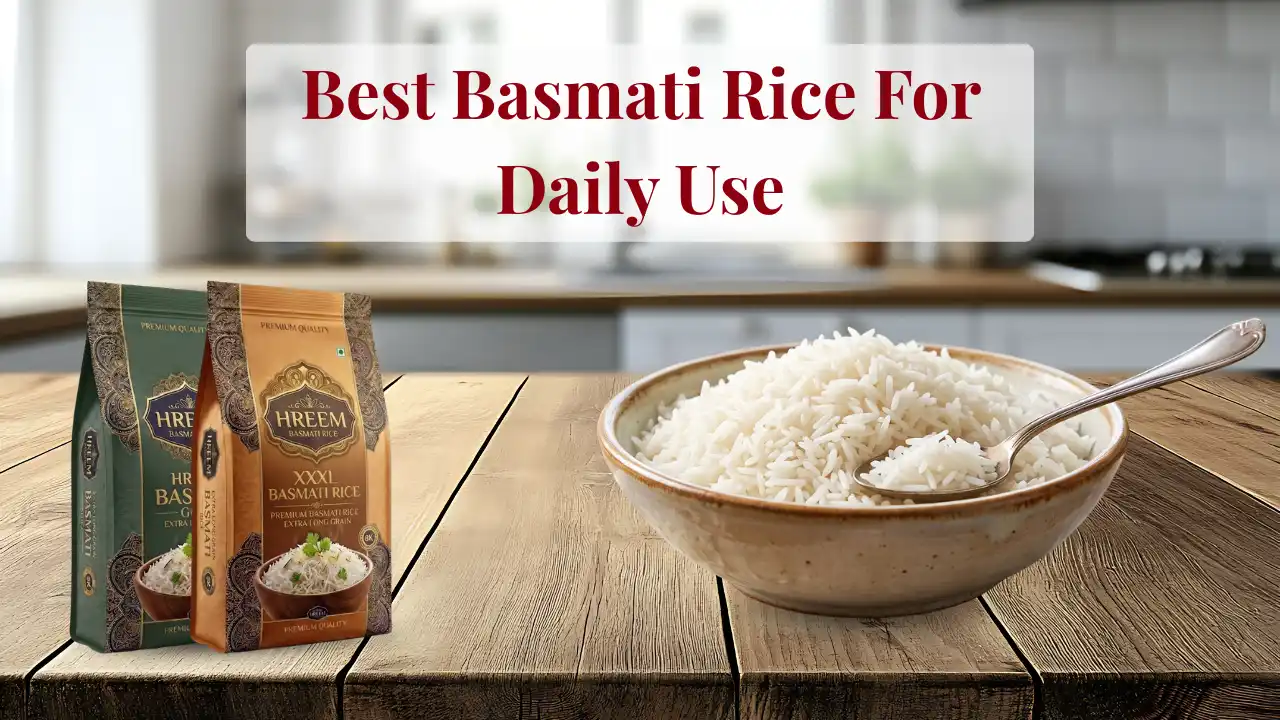
Walking into a store to buy rice for everyday cooking often leaves you stuck between a dozen options, from premium long grains to basic economical packs. Most guides talk about biryani-grade rice, but daily meals need something different, affordable, quick to cook, and mild in aroma. Here we break down price, cooking time, and grain type across the varieties that actually count as the best basmati rice for daily use.
What Makes a Basmati Rice Good for Daily Use?
Rice for special occasions and rice for everyday meals are not judged by the same standard. A few practical factors decide whether a variety fits into regular home cooking.
Affordable Pricing
Since daily-use rice is bought often and in larger quantities, the price per kg matters more than it does for occasional biryani rice. A variety that fits comfortably into a monthly grocery budget works better than a premium one bought only for special meals.
Mild Aroma
Strong, heavy fragrance is pleasant once in a while, but it can feel overpowering when eaten every day. A milder aroma pairs better with dal, curry, and vegetables without dominating the plate.
Fast Cooking Time
Daily meals need rice that cooks quickly without long soaking. This saves both time and fuel, especially in households cooking two or three times a day.
Non-Sticky, Fluffy Texture
Grains that stay separate after cooking mix well with everyday dishes like dal-rice and simple curries, making them easier to serve and eat.
Top Basmati Varieties for Daily Use
Not every basmati type suits everyday cooking. The table below compares grain length, aroma, retail price range, and best use for the varieties often picked as the best basmati rice for daily use.
| Variety | Grain Length | Aroma | Best For |
|---|---|---|---|
| 1401 Basmati Rice | Long | Moderate | Thalis, curries, mid-range meals |
| 1509 Basmati Rice | Medium-long | Mild | Plain rice, khichdi, lunch boxes |
| Sugandha Basmati Rice | Medium | Mild | Everyday dal-rice, budget cooking |
| Pusa Basmati Rice | Medium-long | Mild to moderate | Daily pulao, light biryani |
How to Cook Daily-Use Basmati Rice Perfectly
Getting the texture right for daily meals comes down to a simple process, not a complicated one.
Water Ratio and Soaking
Use a water-to-rice ratio of about 1.5:1 for most daily-use varieties like 1509 or Sharbati. Soak the rice for 15 to 20 minutes before cooking, this helps the grains cook evenly without turning mushy.
Simple 3-Step Method
Rinse the rice two to three times until the water runs mostly clear, this removes excess starch. Next, soak it for the recommended time. Finally, cook it on low to medium heat until the water is absorbed and the grains are tender.
Once done, let the rice rest for a few minutes before fluffing gently with a fork. This keeps the grains separate instead of clumping together.
Branded Packet vs Loose Mill Variety Rice: Which to Choose?
Both options work for daily cooking, but they suit different needs.
Branded Packaged Rice
Packaged rice offers consistency, since every batch is processed and graded the same way. It also comes with sealed packaging for convenience and longer shelf stability. This reliability usually comes at a higher price per kg compared to buying directly by variety.
Loose or Mill-Sourced Varieties
Buying loose rice by variety, such as 1509 or Sharbati, often works out cheaper, especially in bulk. It also gives access to fresher stock directly from the mill, with a better price-to-quality ratio for regular use.
Which One Fits Your Needs
Larger families or bulk buyers usually benefit more from loose, variety-based rice due to the cost savings. Smaller households that prioritize convenience over price may prefer packaged options instead.
Is Basmati Rice Healthy for Daily Consumption?
Basmati rice generally has a lower glycemic index than regular white rice, meaning it affects blood sugar more gradually. It also contains some fibre and is naturally low in fat, fitting reasonably well into a balanced daily diet. That said, individual health needs vary. If you are managing diabetes, blood pressure, or any other condition, consult a doctor or dietitian before making dietary changes.
FAQs
Q1: Which basmati rice is best for daily use?
Ans: 1509 and Sharbati basmati rice are the best picks for daily use, offering mild aroma, quick cooking, and affordable pricing for regular household meals.
Q2: What is the healthiest rice to eat daily?
Ans: Basmati rice, due to its lower glycemic index and fibre content, is a healthier daily choice compared to regular white rice for most people.
Q3: Can I eat sona masoori rice daily?
Ans: Yes, sona masoori is light, low in starch, and commonly eaten daily, especially in South Indian households, as an affordable non-basmati alternative to basmati rice.
Q4: What is the best type of rice for daily cooking?
Ans: Medium-grain, mild-aroma varieties like 1509, Sharbati, or sona masoori work best for daily cooking due to their affordability and quick cooking time.