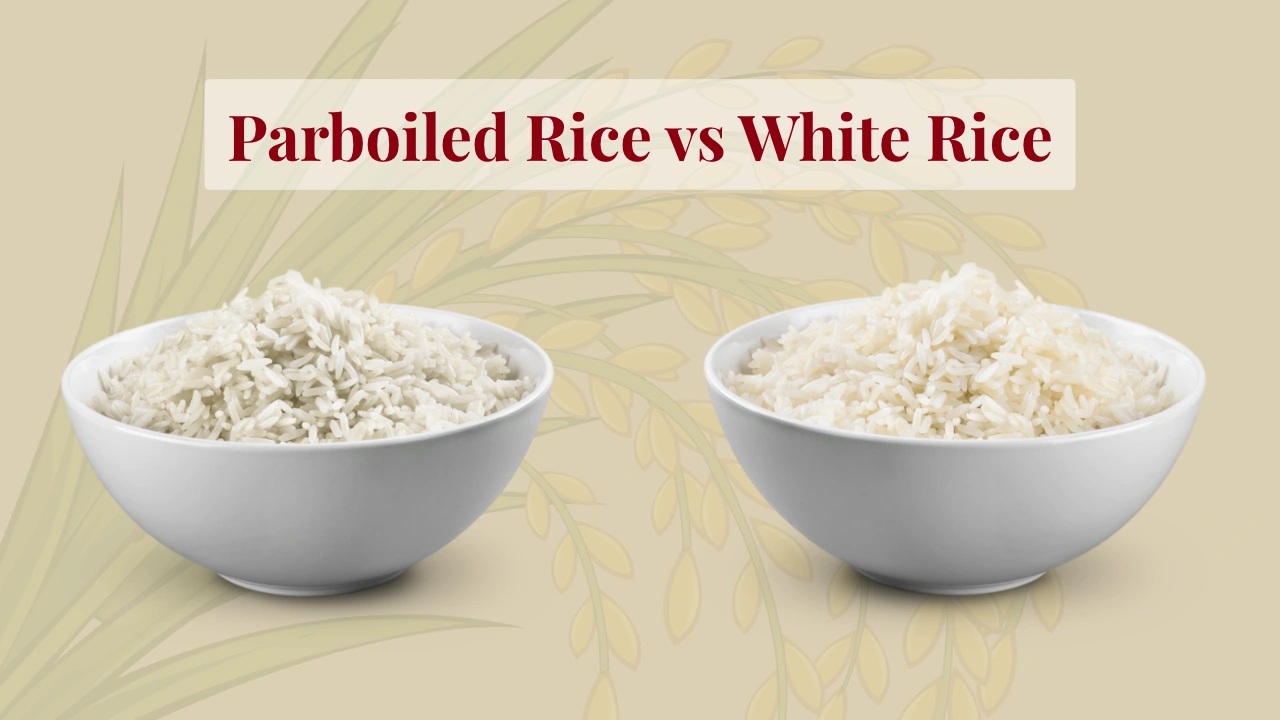
Parboiled rice vs white rice looks like a small choice at first, but the two are made in different ways and behave differently in the pot. Here is how each one is processed, how their nutrition and health effects compare, and how they differ in taste and cooking.
What Is the Difference Between Parboiled Rice and White Rice?
How Parboiled and White Rice Are Made
Parboiled rice is treated before milling. The paddy is soaked, steamed and dried with the husk still on, and then milled. Steaming sets the starch, so the cooked grains stay firm and separate. White rice skips the steaming. It is milled to remove the husk and the outer layer and is usually polished. Standard parboiled rice is still milled white rice, not a whole grain.
What Is the Indian Name for Parboiled Rice?
In India, parboiled rice goes by several names, depending on the language.
| Sella | Hindi term, common in the rice trade |
| Usna chawal | Hindi, also used in West Bengal |
| Ukda chawal | Marathi |
| Puzhungal arisi | Tamil |
Rice sold as sella, such as sella basmati, is parboiled.
Parboiled Rice vs White Rice Nutrition Comparison
Parboiled Rice vs White Rice Calories
The calorie gap is small. USDA FoodData Central lists 123 kcal per 100 g for cooked parboiled rice and 130 kcal for cooked white long-grain rice, which is about 5% less. The idea that parboiled rice has more calories is not supported by this data.
| Calories | 123 kcal | 130 kcal |
| Carbohydrate | 26 g | 28.2 g |
| Protein | 2.91 g | 2.69 g |
| Fibre | 0.9 g | 0.4 g |
| Niacin | 2.31 mg | 1.48 mg |
| Vitamin B6 | 0.156 mg | 0.093 mg |
Why Nutrition Numbers Differ Between Sources
Both USDA entries above are enriched, which means nutrients such as thiamin, folate and iron are added, so gaps in those do not come from parboiling alone. Fibre and vitamin B6 are not among the added nutrients. Indian raw data from ICMR-NIN also shows more fibre (3.74 vs 2.81 g) and thiamine (0.17 vs 0.05 mg) per 100 g in parboiled rice. Do not compare raw and cooked values.
Which Is Healthier, Parboiled Rice or White Rice?
Blood Sugar and Glycemic Index
There is no single glycemic index for either rice. A study of 235 rice types found GI values from 48 to 92. Parboiled rice often gives a lower blood sugar response than white rice. In a controlled study on reheated parboiled rice, 28 healthy adults had a higher glucose response after fresh medium-grain white rice than after fresh or reheated parboiled rice.
Arsenic Levels in Parboiled and White Rice
The newest data is on arsenic. In July 2026, Consumer Reports arsenic testing found parboiled rice averaged 101 ppb inorganic arsenic, the same as long and short grain white rice. Basmati averaged 55 ppb. Boiling rice in extra water, draining it and finishing it in fresh water removed up to 58%. The FDA guidance on limiting arsenic says cooking in extra water cuts inorganic arsenic by 40 to 60%, depending on the rice, but also cuts added folate, iron, niacin and thiamine by 50 to 70%.
Can I Eat Parboiled Rice Every Day?
No official guideline says to eat or avoid parboiled rice every day. It can fit a balanced diet with sensible portions, protein, pulses and vegetables. In parboiled rice vs white rice, parboiled may keep more of certain B vitamins and fibre, but both are refined staples.
Parboiled Rice vs White Rice Taste and Cooking
Parboiled Rice vs White Rice Taste
Parboiled rice cooks into firm, separate grains with a somewhat stronger flavour. White rice is softer and stickier, with a lighter taste. Some people call the parboiled flavour nutty, but taste is personal.
Parboiled Rice vs White Rice Cooking Time
| Rice | Usual cooking time |
|---|---|
| Parboiled rice | About 25 minutes |
| White rice | 15 to 20 minutes |
Parboiled rice does not cook faster. You can cook parboiled rice like normal rice in the same pot, but give it a little more water and time, and follow the pack ratio. Rinsing is optional. The FDA says rinsing has little effect on arsenic and washes off added iron, folate, thiamine and niacin. Soaking is not necessary, though it can shorten the cooking time.
Best Uses of Parboiled Rice
Why Do Restaurants Use Parboiled Rice?
Restaurants like parboiled rice because the grains stay firm and separate and are less likely to turn sticky. Sella basmati is a popular choice for large biryani batches because its grains resist overcooking and sticking. Parboiled rice also suits pilafs, salads and stir-fries.
Can I Make Idli With Parboiled Rice?
Yes. Idli batter is traditionally made with idli rice and urad dal. Idli rice is parboiled rice used specifically for idli and dosa, and many home recipes also use plain parboiled rice, called ukda chawal in Marathi.
FAQs
Q1: Is Parboiled Rice the Same as Brown Rice?
Ans: No. Standard parboiled rice is still milled white rice, while brown rice keeps its outer layer. Consumer Reports found brown rice averaged 113 ppb inorganic arsenic, higher than the 72 ppb average for white rice.
Q2: Is Parboiled Rice Good for Meal Prep?
Ans: It can be. In a controlled study, parboiled rice stored overnight in the fridge and reheated gave a similar blood sugar response to freshly cooked parboiled rice, and a lower one than fresh white rice.
Q3: Does Parboiled Rice Have More Arsenic Than White Rice?
Ans: Not more than regular long grain white rice. Both averaged 101 ppb in the Consumer Reports test, and basmati was lower. The extra water cooking tip above applies to both.
Conclusion
Parboiled and white rice are close in calories. Parboiled rice has more fibre and vitamin B6, and its arsenic level is similar to regular long grain white rice. If arsenic is a concern, cooking either rice in extra water and draining it can lower it. Choose by taste, use and cooking method.